
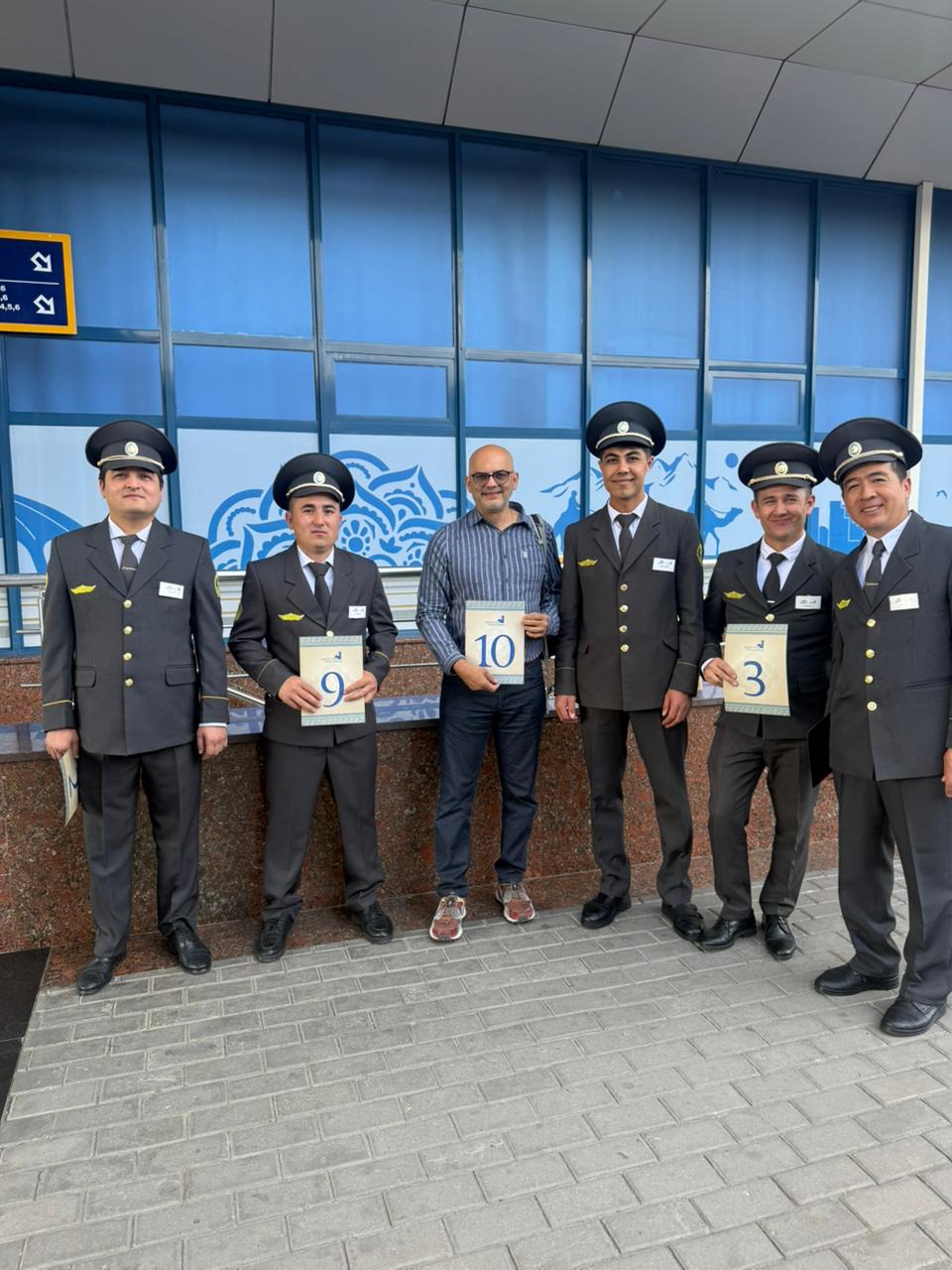
Each year, I make it a point to explore at least one new destination that can eventually be introduced to our discerning travelers. This year, however, was unlike any other. Instead of discovering a single country, I embarked on an extraordinary journey through the heart of Central Asia, tracing the ancient Silk Route across four fascinating nations : Uzbekistan, Tajikistan, Kyrgyzstan and Kazakhstan.
What made this expedition particularly memorable was not just the destinations, but the manner in which we travelled.
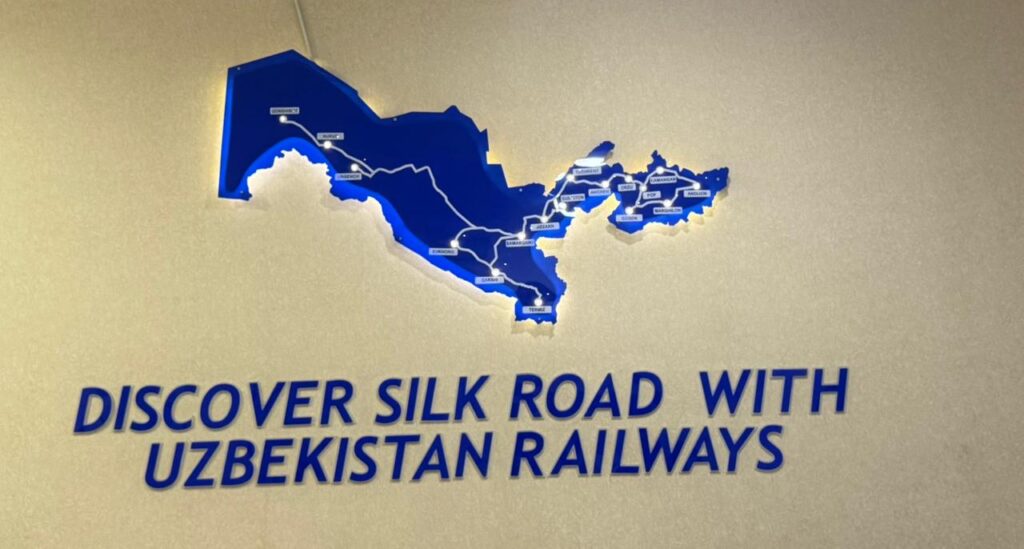
Having visited more than 60 countries, this was my first extended rail journey, spending nearly seven nights aboard a train over a two-week adventure. It was far more than transportation; it was an immersive experience that combined history, culture, landscapes, architecture and human connection into one unforgettable voyage.
Our journey began in Tashkent and would eventually conclude in Almaty, taking us through some of the most captivating and least explored regions of the world. While the Silk Route is often associated with ancient merchants and camel caravans, travelling through it today reveals a region rich in heritage, stunning natural beauty, warm hospitality and fascinating contrasts between ancient traditions and modern life.
Tashkent – The Gateway to the Silk Route in Central Asia
One of the biggest surprises about Central Asia is how accessible it is from India. A direct flight from Delhi to Tashkent takes less than three hours, making it an ideal destination for travellers looking for something unique yet easy to reach.
Tashkent immediately impressed me with its broad avenues, green spaces and organised urban planning. With a metropolitan population approaching five million, it is one of the largest cities in the former Soviet world outside Russia.
Our exploration included visits to major landmarks, historic madrasas, Soviet-era boulevards and the iconic Amir Timur Square. Yet what fascinated me most was the city’s atmosphere. Unlike many large metropolitan centres, Tashkent feels remarkably spacious, clean and relaxed.
One of the city’s most fascinating attractions is its Metro system. Often regarded as one of the most beautiful subway networks in the world, each station resembles an underground art gallery, adorned with chandeliers, mosaics and intricate architectural details.
We were fortunate to visit during spring, arguably the finest season to explore Central Asia. Tulips were blooming across parks and boulevards, families gathered outdoors, and preparations for Novruz; the Persian New Year were visible throughout the city. The strong Persian influences that continue to shape Central Asia’s cultural identity became increasingly apparent as our journey progressed.
Uzbek Hospitality – A Culture of Generosity
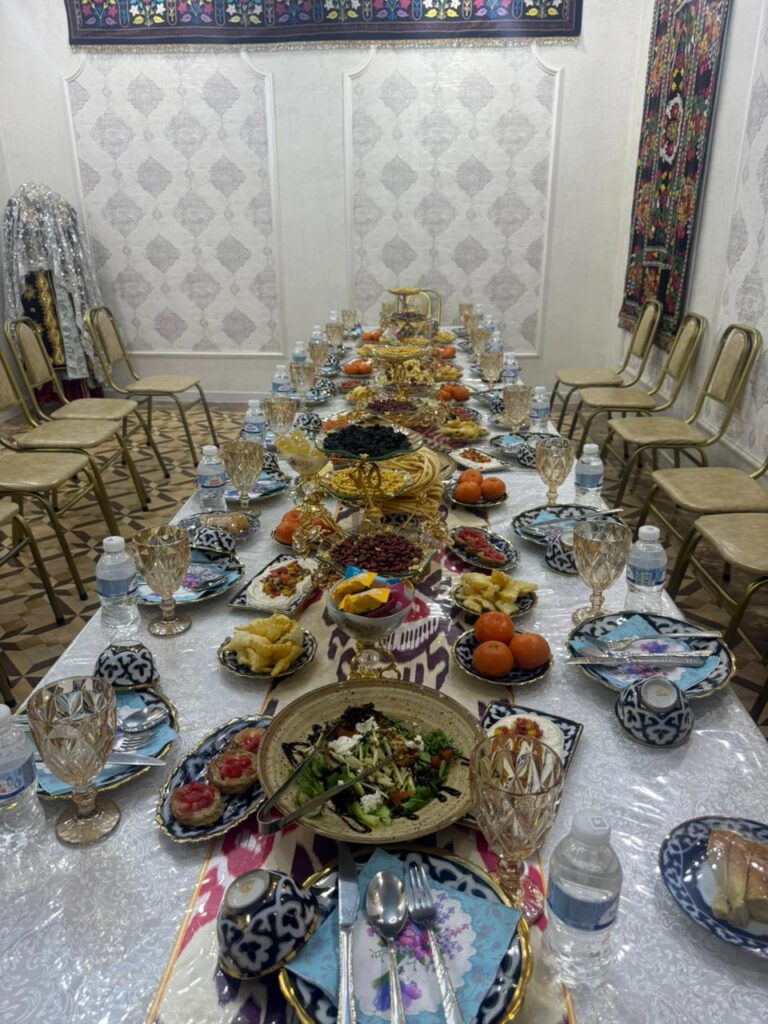
One evening, we were invited into a local Uzbek family’s home for dinner and it became one of the most authentic experiences of the trip.
Hospitality here is not merely a tradition; it is a way of life.
Long before the main course arrived, the dining table was overflowing with breads, fresh fruits, nuts, salads and local delicacies. Meals are social occasions, often stretching over hours as families and guests gather together to share stories and conversation.
Of course, no visit to Uzbekistan would be complete without tasting Plov, the country’s most iconic dish. Every region proudly claims to prepare the best version and after trying several variations, it is easy to understand why Uzbeks are so passionate about it.
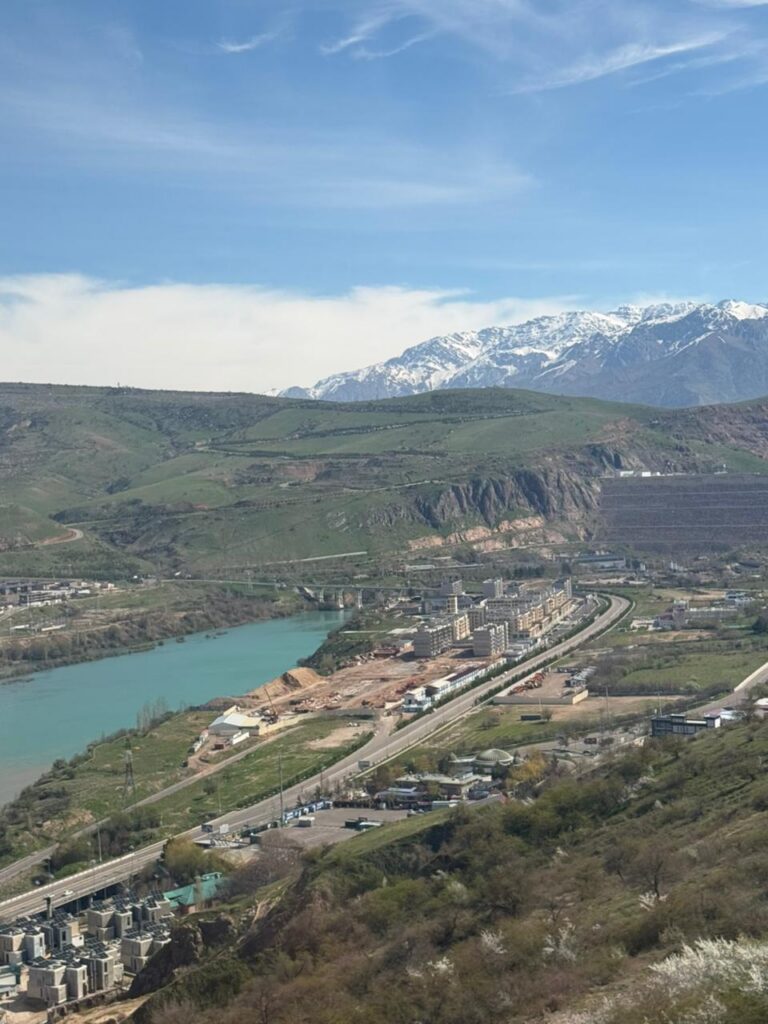
Mountains Beyond the Silk Route
Many travellers associate Uzbekistan with deserts, ancient cities and Silk Route history. Few realise that spectacular mountain landscapes lie just beyond Tashkent.
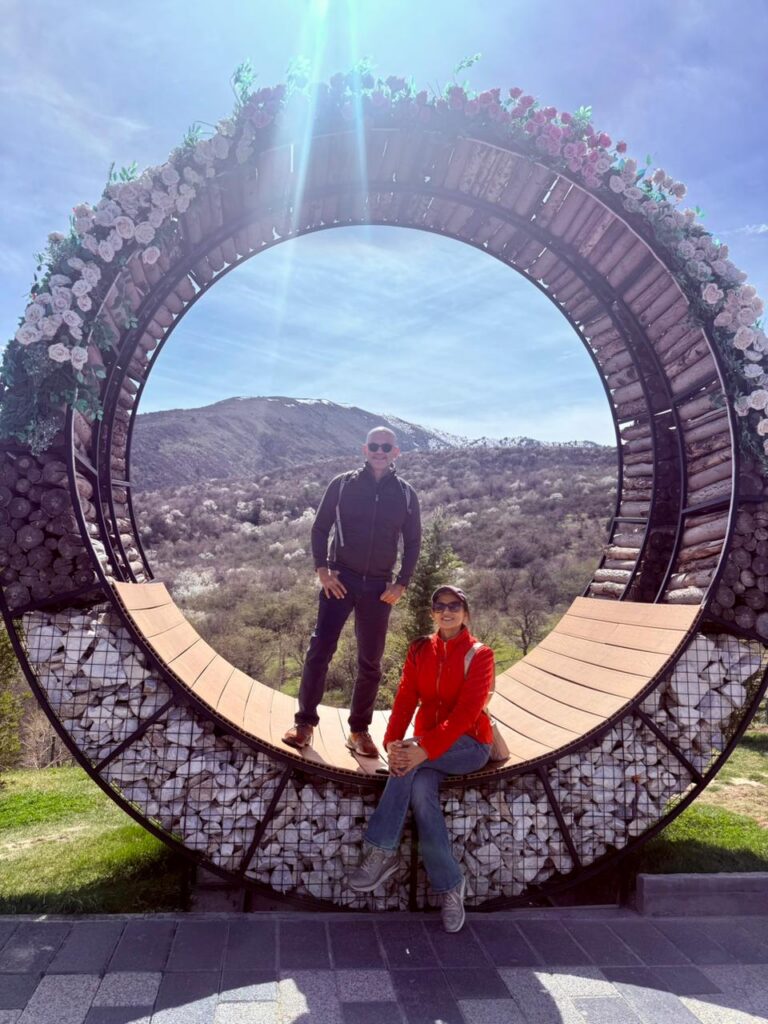
A short drive brought us to the Chimgan Mountains and the Amirsoy mountain resort region, where the scenery changed dramatically. Snow-capped peaks, alpine landscapes and panoramic cable-car rides revealed a completely different side of the country.
Standing amidst these mountains, it became clear that Central Asia offers far more diversity than most travellers imagine.
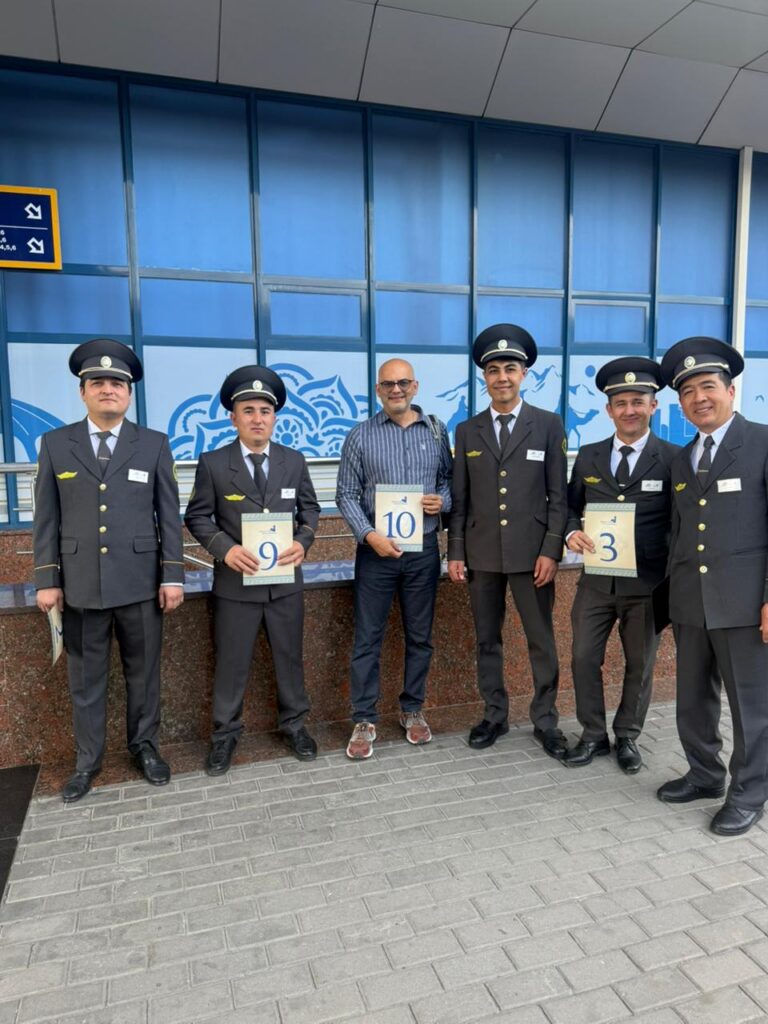
Boarding the Legendary Orient Silk Road Express
By the third day, it was finally time to board the legendary Orient Silk Road Express.
At the station, we were welcomed by the train crew in a private VIP lounge before meeting our fellow travelers. There were approximately 80 guests aboard and interestingly, we happened to be the only Indian couple on the entire expedition.
The train offered several cabin categories, but this journey was never about luxury in the conventional sense.
It was about the experience.
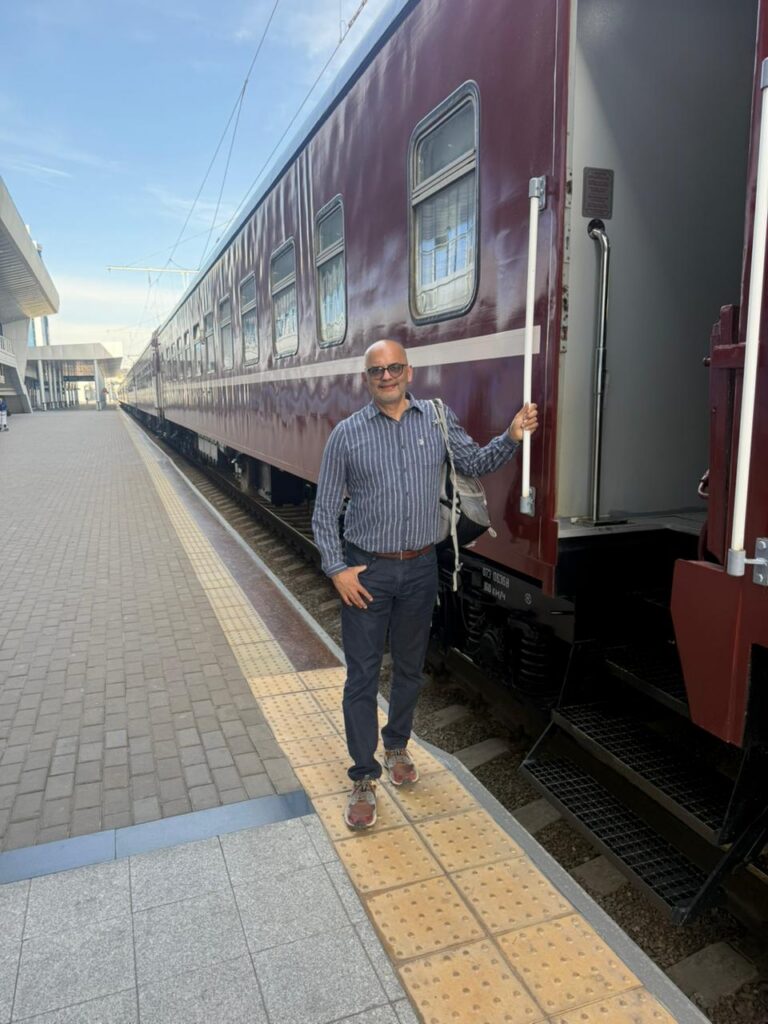
Like a cruise ship on rails, the train became our moving hotel, transporting us across deserts, ancient capitals and remote landscapes. One moment we would be enjoying tea while watching endless steppe unfold outside our window; the next, we would be wandering through cities that have stood for more than two millennia.
As the train slowly departed Tashkent and rolled deeper into the heart of Central Asia, it felt less like a holiday and more like stepping back into history.
Ahead lay the ancient Silk Route cities of Khiva and Samarkand, a journey into Tajikistan, breathtaking mountain landscapes in Kyrgyzstan and the vast natural wonders of Kazakhstan.
But those stories deserve a chapter of their own.
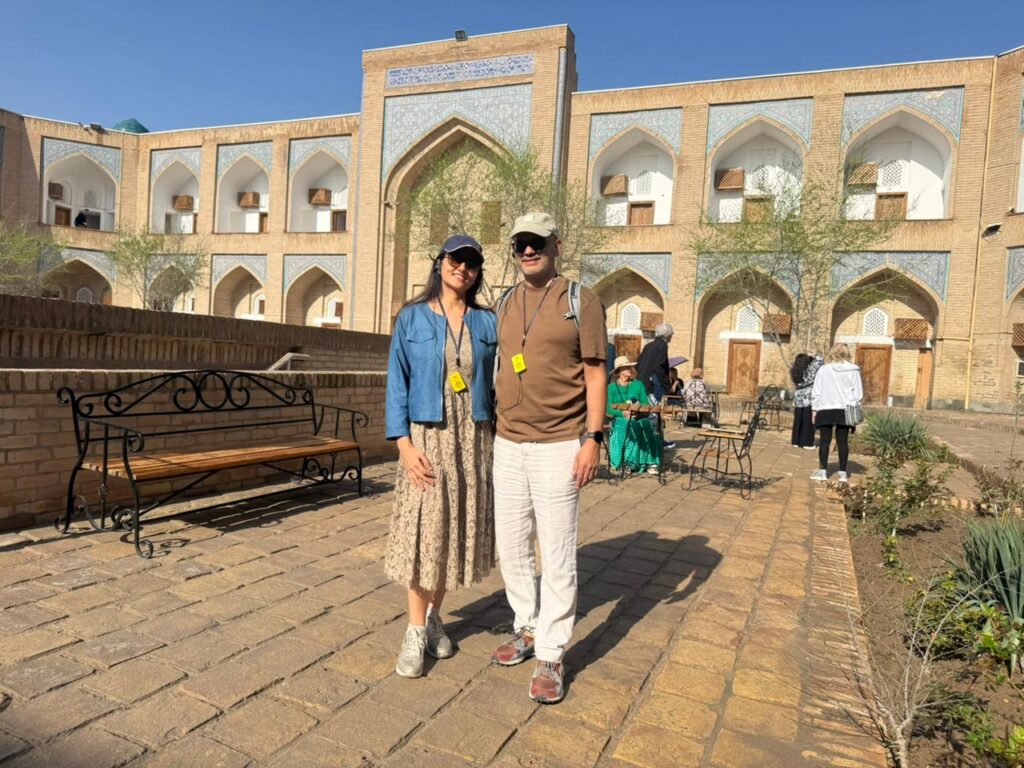
Anticipate the forthcoming second chapter, where our authentic expedition across the Silk Road truly unfolds. We shall traverse from the venerable fortified streets of Khiva and the majestic brilliance of Samarkand to the towering peaks of Kyrgyzstan and the awe-inspiring vistas of Kazakhstan. For those eager to secure their place, Namaste Tourism and Lernidee Trains and Cruises invite you to explore availability for the upcoming season’s departure on this legendary rail odyssey.
To start planning your next adventure, connect with the Namaste Tourism team and let our travel experts assist you.
To know more about my journey, stay tuned for my next blog!